Most sliding doors come with a simple latch lock that's easy to bypass. Adding a security bar ($15-$40), upgrading to a multi-point lock ($129-$249 installed), or adding a foot lock gives you real protection. Lock repair runs $89-$249. The best approach is a combination: a solid mechanical lock plus a physical bar plus a door sensor.
Treasure Coast Sliding Door Repair has fixed and upgraded locks on thousands of sliding doors across Martin County, St. Lucie County, and Indian River County since 2009. Here's something most homeowners don't realize: the factory lock on your sliding door is the weakest point of entry in your entire house. It's not that the lock is bad. It's that it was designed for convenience, not security. A single latch holding a 100+ pound glass panel? That's a starting point, not a finish line. Let's walk through the lock types, what actually keeps your door secure, and what it costs to upgrade.
The Three Types of Sliding Door Locks
Almost every sliding door we work on has one of three lock types. The first is a basic latch lock. You flip a lever on the handle and a small hook or claw catches a strike plate in the frame. This is the most common type on Treasure Coast homes built in the last 20 years. It keeps the door from being casually slid open, but a firm jolt or a flat tool can pop it loose. The second type is a mortise lock, built into a pocket cut into the edge of the door panel. Mortise locks are more complex internally and harder to defeat, but the internal springs and pins wear out over time. The third type is a keyed handle lock, which requires a key to open from outside. These offer the best factory-level security but aren't common on older Florida homes.
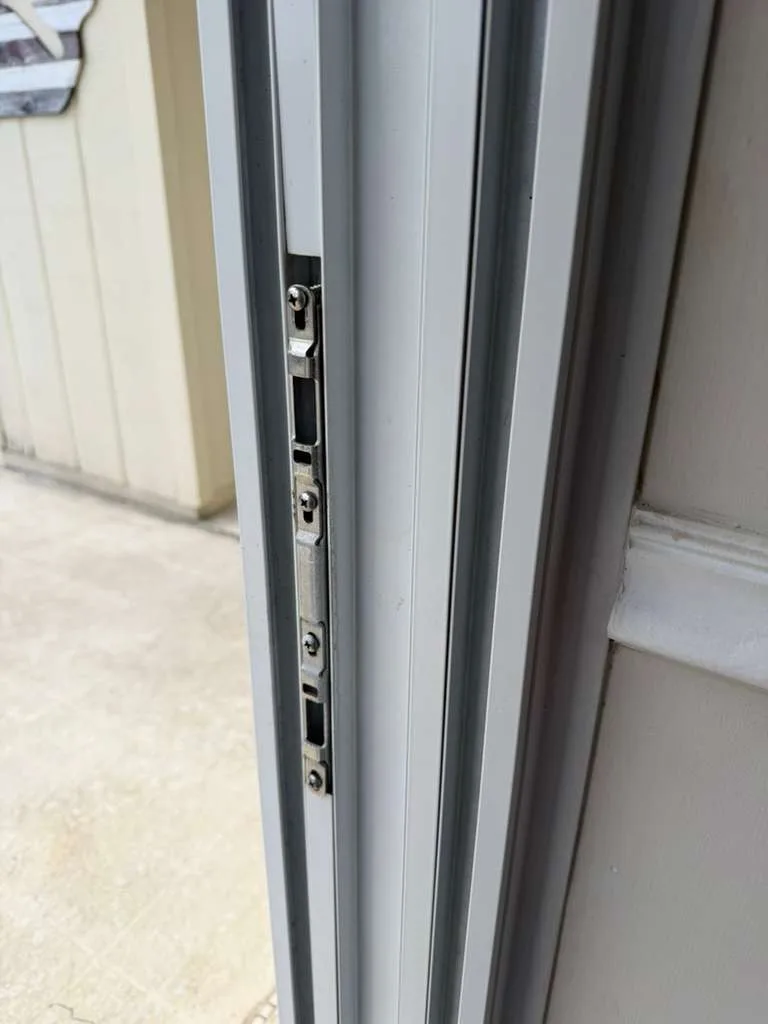
Know your lock type
This mortise lock sits inside the edge of the door panel. When the handle turns, a hook or bolt extends into the frame. Mortise locks offer better security than simple latches but cost more to repair ($129-$249) when the internal mechanism wears out.
Why Factory Locks Aren't Enough
According to the FBI's Uniform Crime Reporting data, sliding doors are one of the most common entry points for residential burglaries. The reason is simple. A single-point latch lock can be defeated with a pry bar, a screwdriver, or by lifting the door panel out of the track. Most burglars don't pick locks. They force them. A standard latch lock offers minimal resistance to someone who wants in. This doesn't mean your sliding door is a security disaster. It means the factory lock is just one layer, and you need more. Think of it like your front door. The deadbolt does the heavy lifting. The doorknob lock is barely a speed bump. Your sliding door needs the equivalent of a deadbolt.
Security Bars and Charlie Bars
The simplest and cheapest security upgrade is a bar in the track. A security bar (sometimes called a Charlie bar) sits in the bottom track behind the closed door. Even if someone defeats the lock, the bar physically prevents the door from sliding open. You can buy adjustable security bars at any hardware store for $15 to $40. Some homeowners use a wooden dowel or a cut-to-length piece of pipe. That works too, but adjustable metal bars are sturdier and won't roll out of position. We recommend security bars on every ground-floor sliding door, especially in neighborhoods near main roads or commercial areas. It's a $20 upgrade that stops a $20,000 burglary.
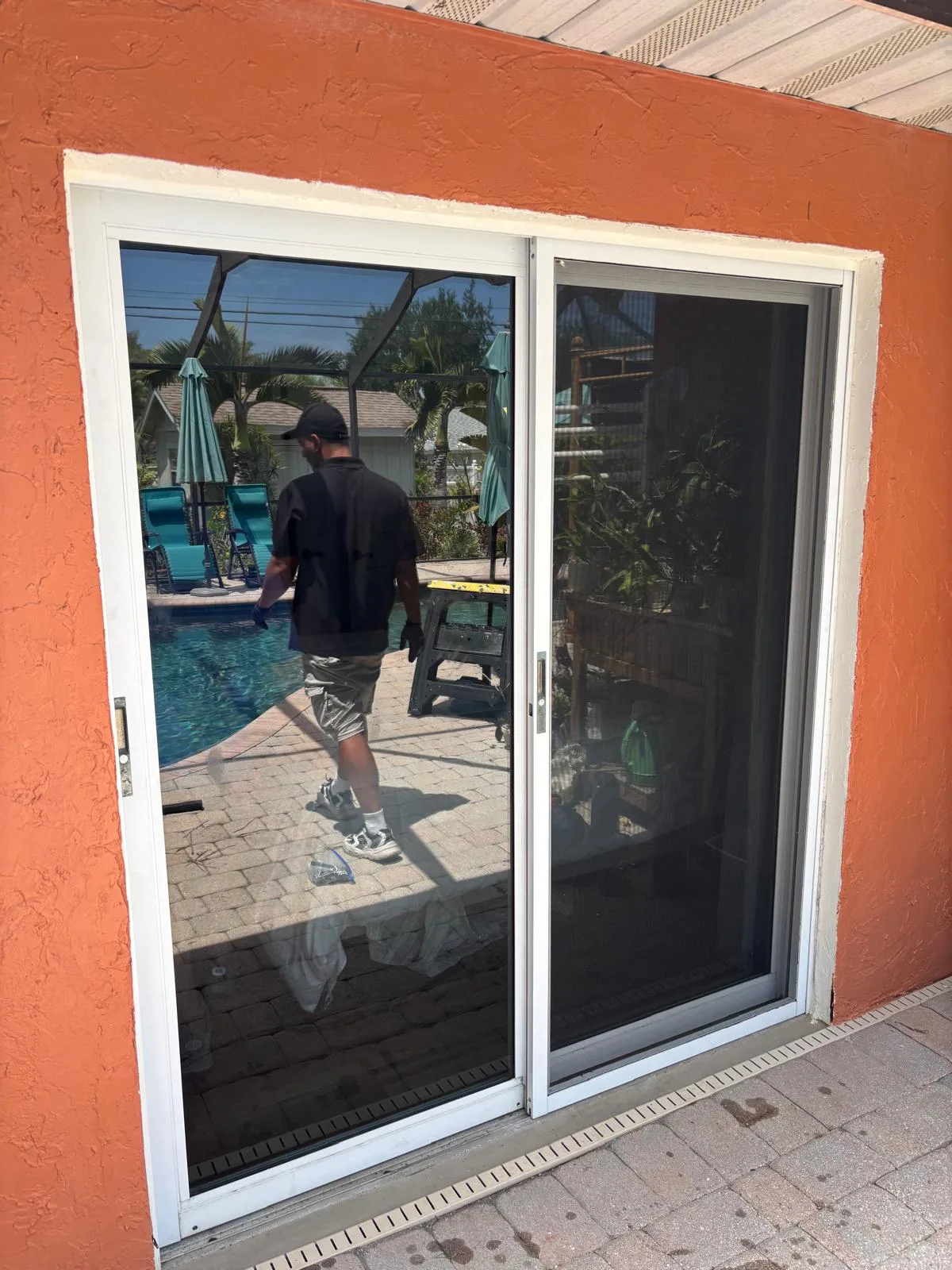
Layered security works best
No single lock or bar is enough on its own. The homes we see with the best security use a solid mechanical lock, a security bar in the track, and a door sensor tied to their alarm system. Three layers, three chances to stop an intruder.
Upgrading to a Multi-Point Lock
A multi-point lock engages the door at two or three points along the frame instead of just one. When you turn the handle, bolts extend at the top, middle, and bottom of the door simultaneously. This makes the door dramatically harder to force open because the pressure is distributed across multiple locking points. Brands like PGT, Andersen, and JELD-WEN offer multi-point locking systems on their newer doors. If your door currently has a single-point latch, we can often retrofit a multi-point lock for $149 to $249 installed, depending on the door brand and model. It's the single biggest security upgrade you can make to an existing sliding door.
The lift-and-force trick, and how to stop it.
Many older sliding doors can be lifted out of the track even when locked, because there's play between the top of the panel and the upper track. A foot lock or toe lock at the base of the door ($25-$60 installed) prevents the door from being lifted. Pair it with anti-lift screws in the upper track for full protection. Call (772) 207-4146 and we can check your door's vulnerability in about 15 minutes.
Foot Locks and Auxiliary Locks
Foot locks bolt into the floor at the base of the door panel. You step on a pedal to engage them. When locked, a pin drops through the door frame into the floor, pinning the door in place. They're nearly impossible to defeat from outside because there's no external access point. We install foot locks for $25 to $60 depending on the floor type (tile, concrete, or wood). Auxiliary locks are additional latch mechanisms you can add to the top or side of the door frame. They work alongside your existing lock to create a second point of resistance. Most auxiliary locks cost $30 to $75 installed and take about 20 minutes to put in. For homes in Stuart and along the coast, where vacation homes sit empty for weeks at a time, these extra layers make a real difference.
Door Sensors and Smart Security
Electronic door sensors detect when a sliding door is opened and trigger an alarm or send a notification to your phone. Most modern home security systems from companies like ADT, SimpliSafe, and Ring include door/window sensors that stick to the frame and the moving panel. When the two pieces separate, the alarm fires. Door sensors cost $15 to $50 per door if you're adding them to an existing system. They don't prevent the door from opening, but they alert you immediately. For a complete setup, combine a mechanical lock, a security bar, and a sensor. That gives you prevention, physical backup, and notification. Glass break sensors are another option, especially for impact-rated doors in the Wind-Borne Debris Region of the Treasure Coast.
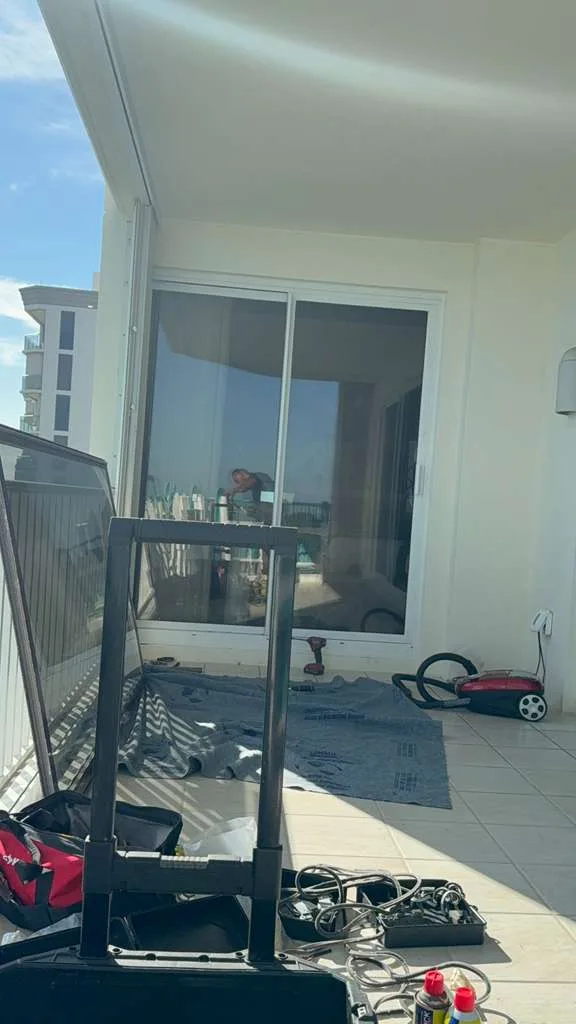
When your lock needs repair, not replacement
If your lock engages but doesn't hold, or the key turns but nothing catches, the internal mechanism is usually worn, not broken beyond repair. Lock repair costs $89-$249 and is almost always cheaper than a full lock replacement.
Signs Your Lock Needs Attention Right Now
Don't wait until something goes wrong. Here are the warning signs that your sliding door lock isn't doing its job. The door shifts or rattles when locked. You can see daylight around the frame even with the door closed and locked. The handle feels loose or spins without engaging. The key won't turn, or turns but the bolt doesn't extend. The latch doesn't catch the strike plate. You have to lift the door to get the lock to engage. Any of these means your lock is either misaligned (often a roller issue) or the lock mechanism itself is failing. Either way, get it checked before it fails completely. A lock repair runs $89 to $249, and we can usually fix it the same day.
What We Recommend for Treasure Coast Homes
After 15+ years and 3,500+ jobs in this area, here's our standard recommendation for sliding door security. First, make sure your existing lock works properly. If it doesn't, fix it ($89-$249). Second, add a security bar to the track ($15-$40, DIY). Third, install a foot lock if there's any vertical play in the door ($25-$60 installed). Fourth, connect a door sensor to your home alarm system ($15-$50). The total cost for all four layers? Under $400 in most cases. That's a fraction of what you'd lose in a break-in, and it makes your sliding door one of the hardest entry points in the house instead of the easiest. Call (772) 207-4146 or request a free estimate online for a lock assessment.
Impact doors and security
If you have impact-rated sliding doors, they're already harder to break through. But the lock is still a potential weak point. Impact glass resists shattering, but a bypassed lock still lets the door slide open. Upgrade the lock too.