
A stuck sliding door is usually caused by dirty tracks or worn rollers. Clean the track, spray silicone lubricant, and adjust the roller height screw. If the door still won't budge, the rollers need replacing ($149-$299 per panel). Don't force it or you'll damage the track and frame.
Treasure Coast Sliding Door Repair gets more calls about stuck doors than any other issue. We've fixed over 3,500 sliding doors across Stuart, Port St. Lucie, Jensen Beach, and the rest of the Treasure Coast since 2009. A stuck door doesn't always mean an expensive repair. About 30% of the time, a 10-minute track cleaning is all it takes. The other 70%? That's usually worn rollers. Here are the 5 steps to try at home, in the order we'd tell a friend to do them.
Tools You'll Need for the Job
Before you start, gather everything so you're not running back and forth to the garage. You probably own most of these already. Here's the full list: a vacuum with a crevice attachment, an old toothbrush or stiff nylon brush, silicone-based spray lubricant (not WD-40), a Phillips screwdriver, and a flathead screwdriver. A flashlight helps too, because the bottom track is hard to see clearly. If you end up needing to remove the door panel, you'll also need a pry bar and a second person. Those panels weigh 80 to 200+ pounds depending on size and glass type. Don't try to move one alone. That's how glass gets cracked and backs get thrown out.
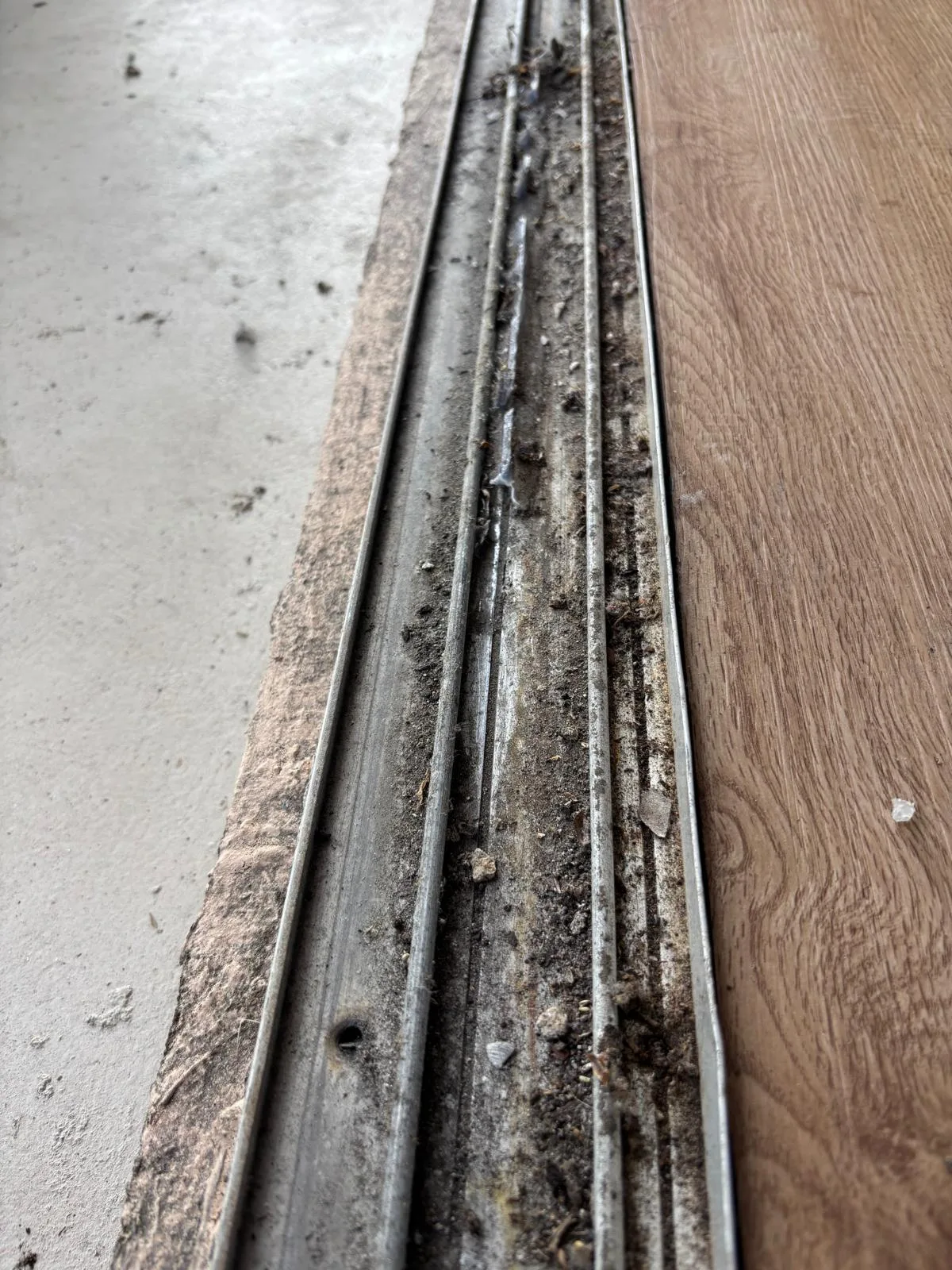
A dirty track is the most common culprit
Florida's mix of sand, dust, pet hair, and pollen builds up in sliding door tracks fast. We've pulled entire clumps of pet fur and dead insects out of tracks that homeowners thought had a mechanical problem. Always start here.
Step 1: Vacuum the Track
Use your vacuum's crevice attachment and run it along the entire length of the bottom track. Get into both channels. You'll be surprised how much debris comes out, especially if you have pets or live near a construction zone. After vacuuming, take your toothbrush and scrub any caked-on grime that the vacuum missed. Pay special attention to the corners where the track meets the frame. That's where dirt packs in and hardens over time. In homes near the Indian River Lagoon or along the Hutchinson Island coastline, we often find salt residue mixed with sand that forms a crusty layer. A damp rag after brushing takes care of it.
Step 2: Apply Silicone Lubricant
Once the track is clean, spray a thin coat of silicone-based lubricant along both rails of the bottom track. Slide the door back and forth a few times to work the lubricant into the roller path. Here's what not to use: WD-40, cooking spray, petroleum jelly, or any oil-based product. WD-40 is a solvent that evaporates and leaves a residue that attracts more dirt. Silicone spray is what the door manufacturers recommend, including Andersen and PGT. You can pick up a can at any hardware store for $5 to $8. Try the door again. Does it glide now? If yes, you just saved yourself a service call. If it still drags, move to step 3.
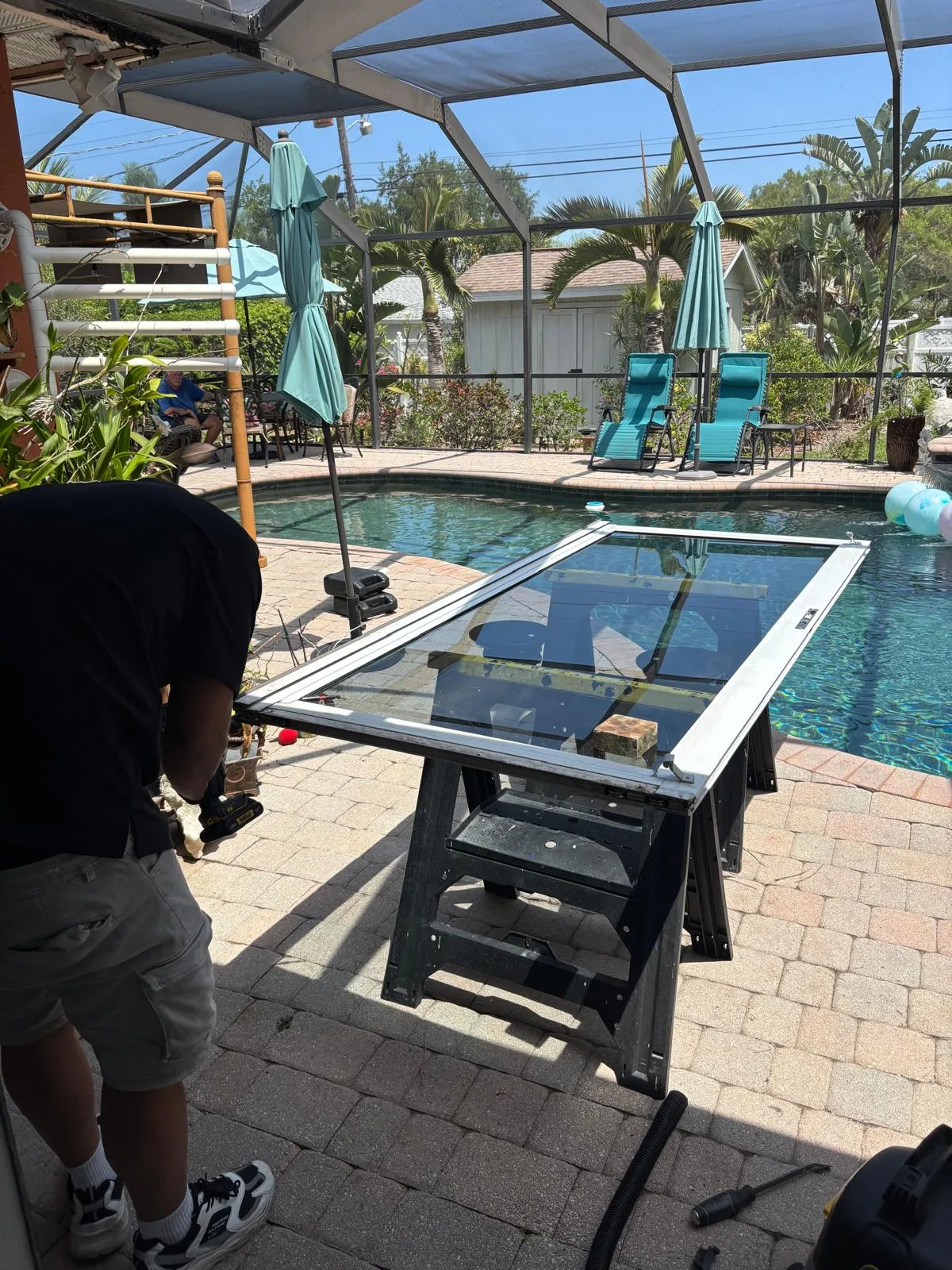
The roller height screw is your best friend
Most sliding doors have two adjustment screws at the bottom edge of the panel. Turning them raises or lowers the door on its rollers. A quarter turn can make the difference between stuck and smooth.
Step 3: Adjust the Roller Height Screws
Look at the bottom edge of the door panel, near each end. You should see small holes or caps covering the roller adjustment screws. Use your Phillips screwdriver to turn them. Clockwise usually raises the door, counterclockwise lowers it. Adjust a quarter turn at a time and test the door after each adjustment. What you're doing is changing how high the panel sits on the track. If the rollers have worn unevenly, one side of the door may be lower than the other, causing it to drag. This is also why your lock might not be catching properly. When the door sits crooked, the latch misses the strike plate. Getting the height right fixes both problems at once.
Step 4: Inspect the Track for Damage
Shine your flashlight along the track and look for dents, bends, or corrosion. A track doesn't need to be visibly mangled to cause problems. Even a small dent can catch the roller wheels and make the door stick at one spot. Run your finger along the top of the rail. Feel any rough spots or bumps? That's where the problem is. If you find minor surface corrosion, you can clean it with fine steel wool and then apply silicone spray. But if the track is bent, dented, or has sections where the metal has lifted away from the threshold, that's a job for a pro. Track repair costs $129 to $349, and we can usually do it without removing the entire track from the floor.
Important: never force a stuck door.
Every time you shove a stuck door open, you're grinding the worn rollers deeper into the track. A $200 roller replacement turns into a $400+ job when the track gets damaged too. If steps 1 through 3 don't fix it, stop forcing and call (772) 207-4146.
Step 5: Check the Rollers
If you've cleaned the track, lubricated it, adjusted the height screws, and the door still sticks, the rollers are worn out. You can confirm this by looking at the bottom of the door while someone slowly slides it. Do you see the wheels spinning? Or is the door just dragging on metal housings? Worn rollers have flat spots, cracks, or corroded bearings that won't spin. On the Treasure Coast, Florida's humidity and salt air corrode roller bearings faster than in drier climates. We typically see roller failure at 8 to 12 years for inland homes in Port St. Lucie and 5 to 8 years for coastal properties. Roller replacement runs $149 to $299 per panel and takes about 45 minutes.
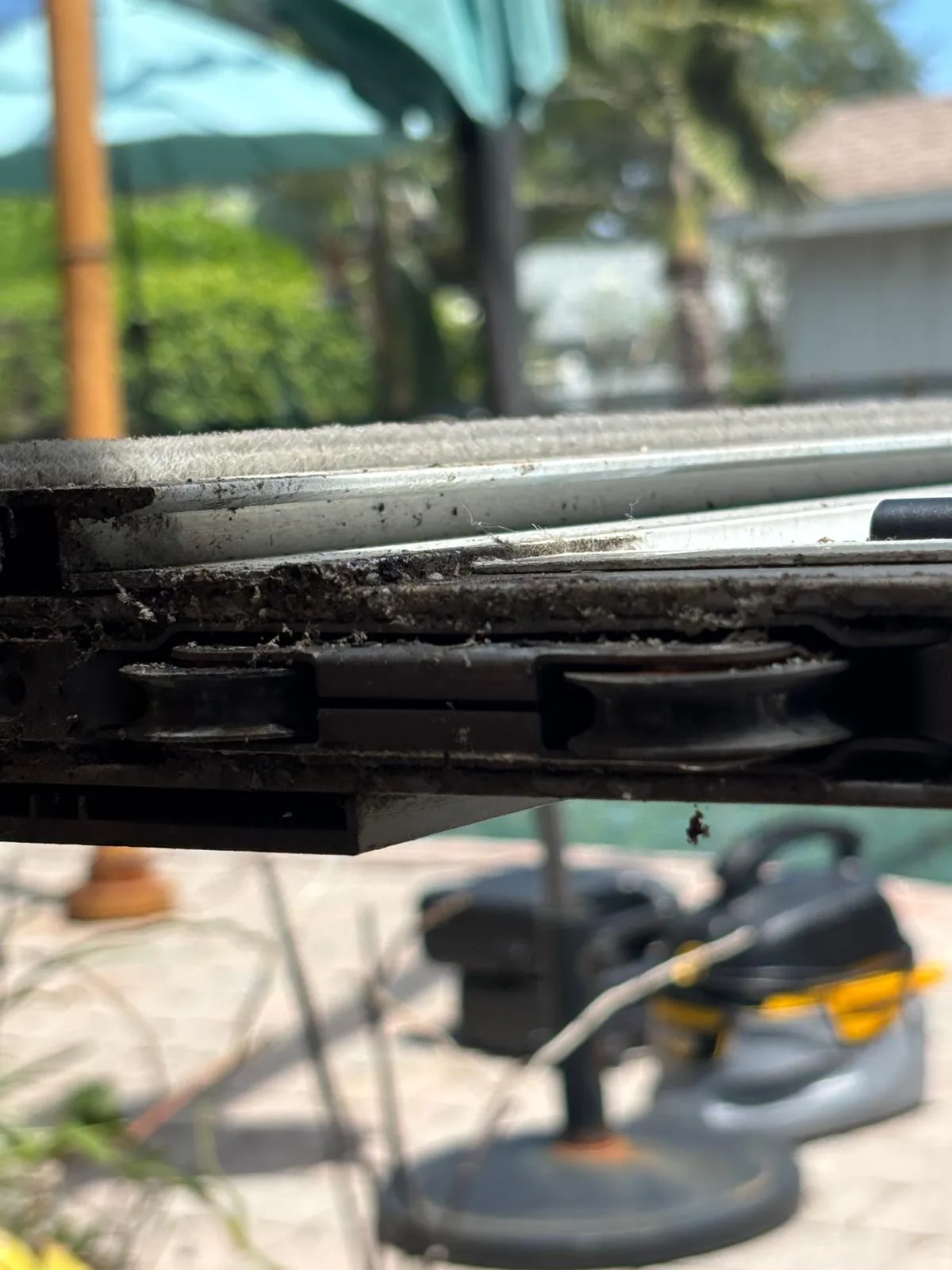
This is what worn rollers look like
See the flat spots on the wheels and the rust on the bearings? These rollers came from a 10-year-old door in Stuart. The homeowner had been forcing the door open for months, which also damaged the track. Fresh rollers made it glide like new.
When to Call a Pro Instead of DIY
Track cleaning and lubrication? Go for it. Roller height adjustments? Sure, just go slow. But there are situations where DIY will make things worse. Call a professional if the door weighs more than you can safely handle, if the track is visibly bent or damaged, if you can hear metal grinding on metal, or if the door has popped off the track entirely. Roller replacement also requires removing the door panel, which is a two-person job at minimum. We carry the exact roller assemblies for Andersen, PGT, CGI, Pella, Milgard, and JELD-WEN doors on our truck, so we can match and install same-day in most cases.
What It Costs When a Pro Fixes It
Here's a quick breakdown of what you'll pay if the DIY route doesn't work. Roller replacement is $149 to $299 per panel and covers removing the door, swapping the rollers, reinstalling, and adjusting for a perfect fit. Track repair runs $129 to $349 depending on whether we're straightening, patching, or doing a full track replacement. Door alignment by itself is $99 to $199 if the rollers and track are fine but the door just needs adjusting. We always give you the exact price before we start. No surprises. If you're in Martin County, St. Lucie County, or Indian River County, we can usually get there the same day you call.
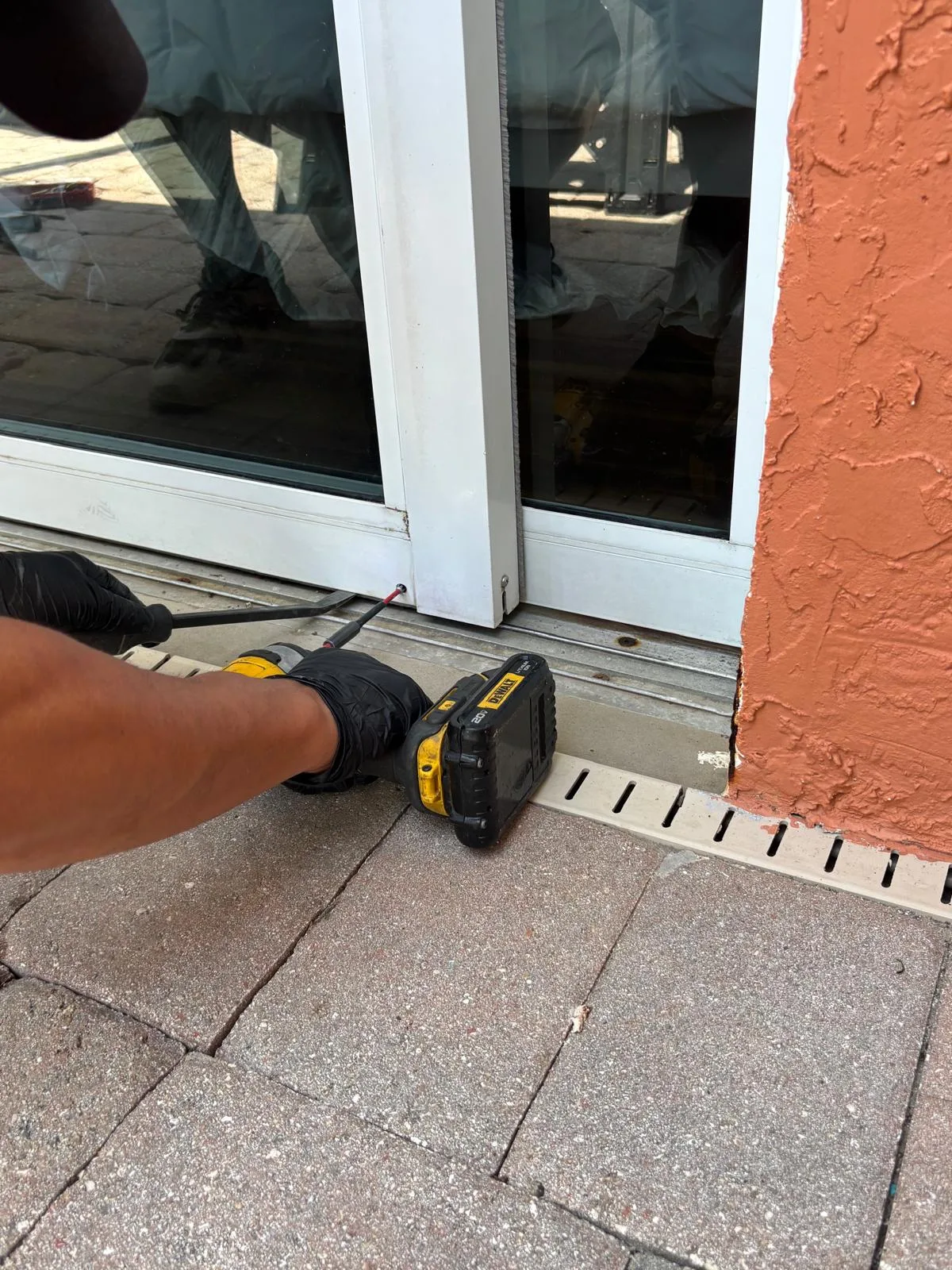
One visit, one fix
We bring the parts on the truck. That means no second trip to order rollers, no waiting a week for parts. Most stuck door repairs take 30 to 60 minutes from start to finish.
Prevent Your Door from Getting Stuck Again
Once your door is sliding smoothly again, keep it that way. Vacuum the track once a month. Spray silicone lubricant every 3 to 4 months. Check the roller height screws twice a year, especially before and after hurricane season. If you have pets, bump the track cleaning to every two weeks. Pet hair is the number one track clogger we see. A few minutes of regular maintenance adds years to your rollers and saves you hundreds in future repairs. It's one of the easiest home maintenance tasks there is, and most people skip it until the door won't move.