
The most common sliding door problems are worn rollers (causes sticking/dragging), dirty or bent tracks, broken locks, and failed glass seals. Cleaning the track and lubricating with silicone spray fixes about 30% of stuck doors. For the rest, you'll need roller replacement ($149-$299), track repair ($129-$349), or lock work ($89-$249). Don't wait. Small problems turn into expensive ones fast.
Treasure Coast Sliding Door Repair has been fixing sliding doors across Stuart, Port St. Lucie, Jensen Beach, Fort Pierce, and Vero Beach since 2009. In 3,500+ repair jobs, we see the same 8 problems over and over again. Most of them are easy to diagnose. Some you can fix yourself with 15 minutes and a can of silicone spray. Others need a pro with the right rollers and tools. Here's every common sliding door problem we encounter, what's causing it, and what to do about it.
1. Door sticks or drags when you open it.
This is the number one call we get. The door used to slide smoothly and now it takes real effort to open or close. You might have to lift the door and push at the same time, or it only moves if you shove hard from one specific angle.
What's causing it: 90% of the time it's worn rollers. The wheels at the bottom of the door panel spin on the track every time you open and close it, carrying 80 to 200+ pounds of glass and frame. After 8 to 12 years (less in humid Treasure Coast conditions), the bearings wear down, the wheels flatten or crack, and the door stops gliding.
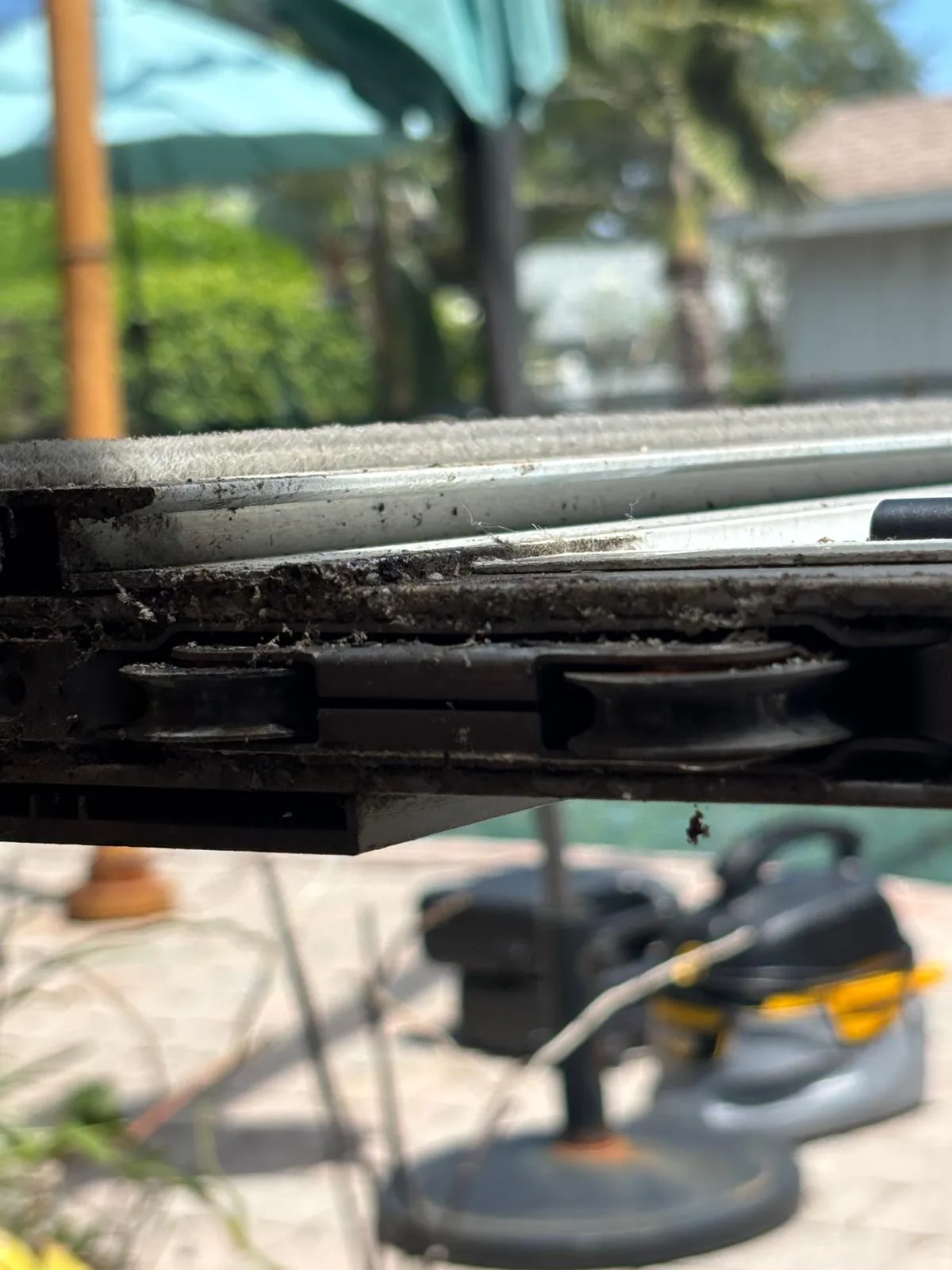
Check this first
Before assuming it's rollers, clean the track with a vacuum and old toothbrush, then spray silicone lubricant (not WD-40) along the track. If the door still sticks, it's the rollers. Replacement costs $149 to $299 per panel and takes about 45 minutes.
2. Grinding or scraping noise.
Metal on metal. Every time the door moves you hear a grinding, scraping, or screeching sound that makes everyone in the house cringe. This is not just annoying. It's your door telling you something is actively breaking.
What's causing it: Either the roller wheels are cracked and the metal housing is dragging on the track, or the track itself is bent or corroded and the rollers can't spin properly. In homes near the St. Lucie River, the C-24 canal, or anywhere on Hutchinson Island, salt air corrosion accelerates this significantly. We've seen rollers completely seize up in as few as 5 years on barrier island condos.
What to do: Don't keep forcing the door. Every time you push a grinding door open, you're putting stress on the track and the frame. That turns a $200 roller job into a $500+ repair. Call us at (772) 207-4146 and we can usually get there the same day.
3. Door won't lock or latch properly.
You push the handle, the latch moves, but it doesn't catch. Or the lock engages but you can see daylight around the frame. This is a security issue and it's more common than most people realize.
What's causing it: Usually the door has dropped slightly because the rollers are worn unevenly. When the door sits crooked, even by a quarter inch, the latch misses the strike plate in the frame. Sometimes the lock mechanism itself is broken, especially on older mortise-style locks where the internal spring fails.
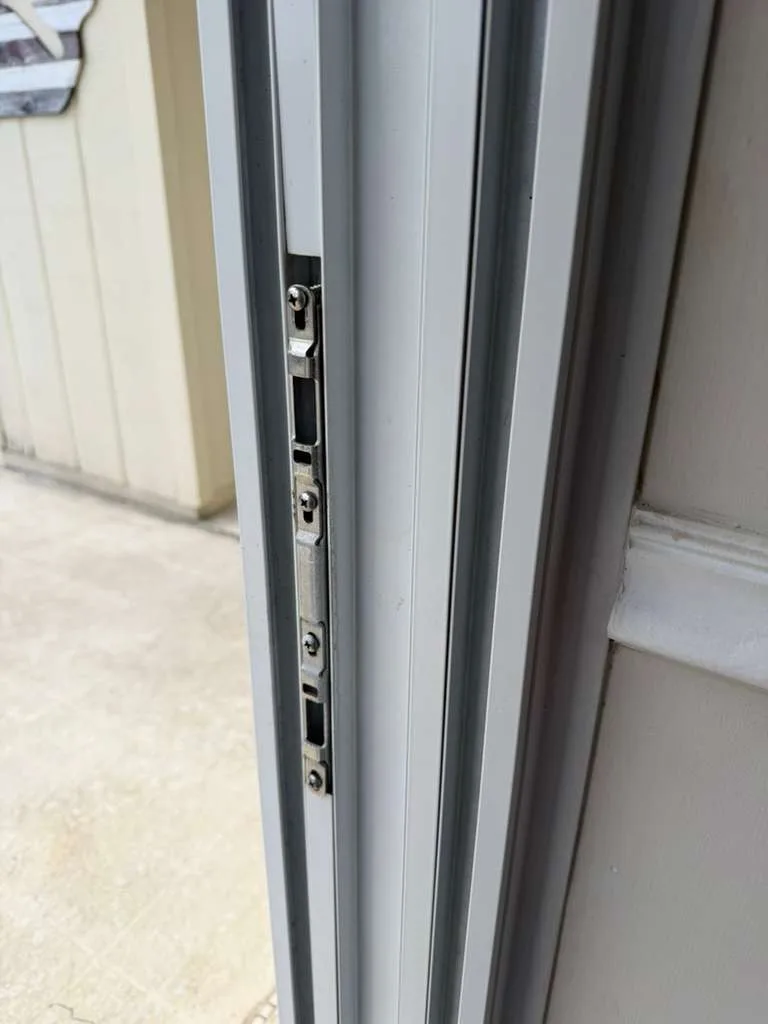
Quick test
Try adjusting the roller height screw at the bottom edge of the door panel. Turning it clockwise usually raises the door. If the lock lines up after adjusting, it was a roller height issue. If it still won't catch, the lock mechanism or strike plate needs work. Lock repair runs $89 to $249.
4. Gaps at the bottom of the door.
You can see daylight under the door. Bugs get in. Rain blows under it during storms. Your AC bill is higher than it should be because conditioned air is leaking out.
What's causing it: The rollers have worn down and the panel is sitting too low, or the threshold has deteriorated. In Florida, where we run our AC 8 to 9 months a year, a gap at the bottom of a sliding door can add $15 to $30/month to your energy bill according to the U.S. Department of Energy's estimates on air infiltration through poorly sealed doors and windows.
What to do: Adjusting the roller height screw might close the gap temporarily. If the rollers are shot, replacing them raises the panel back to the correct height. If the threshold is worn, we can replace that too. Either way, fix it before hurricane season (June 1 through November 30) when wind-driven rain will exploit every gap.
5. Door jumps off the track.
The door pops out of the bottom track or wobbles side to side when you move it. Scary when it happens, and potentially dangerous with a 100+ pound glass panel swinging loose.
What's causing it: Flat or broken rollers that no longer grip the track rail, or a track that's bent out of shape. Sometimes both. We see this a lot in older homes in the River Park area of Port St. Lucie and the original neighborhoods of Stuart where doors are 20+ years old.
What to do: Don't try to force the door back on yourself. You can crack the glass or damage the frame. This is a call-a-pro situation. We'll check the rollers, straighten or replace the track if needed, and make sure the door sits securely.
6. Fog or condensation between the glass panes.
Your sliding door glass looks cloudy, foggy, or has moisture droplets trapped between the two panes. Wiping does nothing because the moisture is inside the sealed unit.
What's causing it: The seal between the two layers of glass (called an insulated glass unit, or IGU) has failed. Once the seal breaks, humid Florida air gets between the panes and condenses. There's no way to reseal it. According to glass industry standards published by the Insulating Glass Manufacturers Alliance (IGMA), the average lifespan of an IGU seal in a high-humidity climate is 10 to 20 years.
What to do: The glass panel needs to be replaced. Costs $299 to $899 depending on size and whether you need standard, tempered, or impact-rated glass. If your home is in the Wind-Borne Debris Region under the Florida Building Code (FBC 7th Edition, Chapter 16), the replacement must be impact-rated. Parts of the Treasure Coast east of US 1 fall in this zone.
7. Screen door won't stay on track.
The screen door falls off every time you try to slide it, or it sags and drags along the bottom. One of the most frustrating problems because it feels like it should be simple but it keeps happening.
What's causing it: Screen doors use smaller, lighter rollers than the main glass panel, and they wear out faster. The frame can also warp over time, especially the lightweight aluminum frames common on Treasure Coast homes. If the screen frame itself is bent, no amount of roller adjustment will keep it on track.
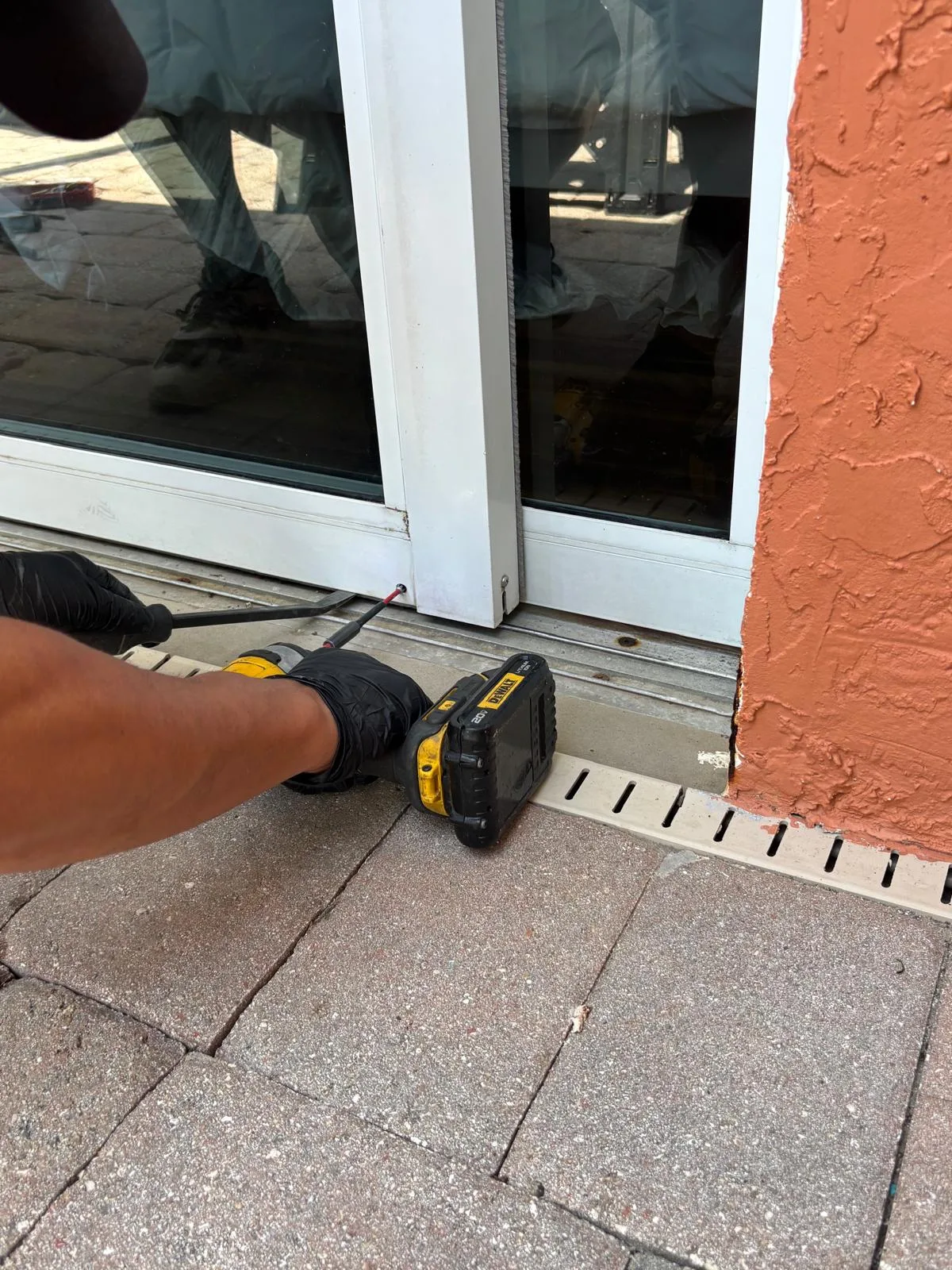
DIY or pro?
If the frame is straight and just the rollers are bad, a screen door roller kit from a hardware store can work. But if the frame is bent or the track channel is damaged, save yourself the headache and call us. Screen door repairs run $79 to $299.
8. Door is hard to lock before a storm.
Hurricane season is June 1 through November 30, and every year we get a wave of calls from Treasure Coast homeowners who tried to lock their sliding doors in preparation for a storm and realized the door won't secure properly.
What's causing it: Usually a combination of worn rollers (door sits crooked), a dirty or bent track (door doesn't close flush), and deteriorated weatherstripping (gaps remain even when closed). All three issues compound each other, and a storm will exploit every weakness.
Don't wait for the storm to test your door.
If your sliding door doesn't close flush, doesn't lock cleanly, rattles in the wind, or has visible gaps, get it fixed before hurricane season starts. A $200 repair now prevents thousands in water damage during a storm. Call (772) 207-4146 for a pre-season door check.
When to DIY vs. when to call a pro.
You can handle track cleaning, silicone lubrication, and minor roller height adjustments yourself. Anything that involves removing the door panel (80 to 200+ pounds of glass and frame), replacing internal lock mechanisms, straightening bent tracks, or working with impact glass should go to a professional. The risk of cracking the glass, stripping threads, or injuring yourself isn't worth saving a few dollars.
Treasure Coast Sliding Door Repair serves all of Stuart, Port St. Lucie, Jensen Beach, Fort Pierce, Vero Beach, and every community in Martin, St. Lucie, and Indian River County. Most appointments are same-day or next-day. We bring the parts on the truck and fix it in one visit. Call (772) 207-4146 or request a free estimate online.